
Field note
A technique that lived in one memory
Mariyappan, an Irula elder, was asked to build again with a method he learned from the generations before him.
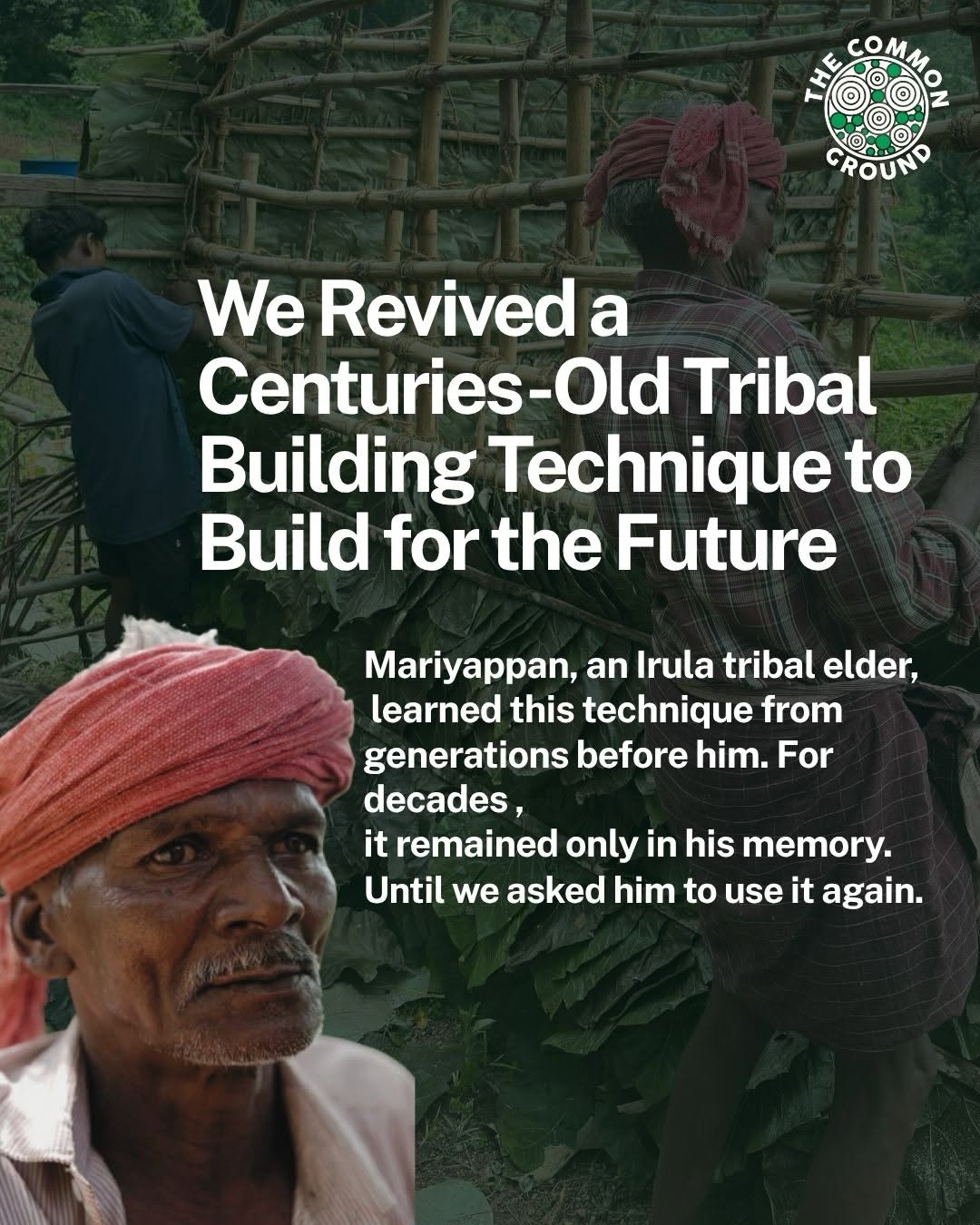
The note is specific, and it should stay specific. Mariyappan, an Irula elder, learned a building technique from the generations before him. For decades it remained only in his memory. Then he was asked to use it again.
The headline on the photograph says a centuries-old tribal building technique was revived, to build for the future. Read that as the movement's account of what it asked, not as a completed history of a people. Revival is a large word. The verifiable act is smaller and more dignified. Someone who held the knowledge was invited to practice it, in company, on a real structure.
You can see the work behind him. Poles. Leaf. Hands. A method is not an aesthetic. It is a sequence a body remembers. When that sequence is not asked for, it does not always die. It waits. Waiting is not the same as safety. Memory is a person. A person is not an archive.
This is why the knowledge page on this site refuses a how-to. Publishing the steps would turn Mariyappan's lineage into a free method with the organisation's name on it. The right public record is the relationship. Who knows. Who asked. Who builds. What the organisation will not claim.
Natural building workshops exist so other people can learn by doing, with that respect still in the room. If you want the current edition, ask. Do not treat this note as a booking page, or as permission to copy a technique out of a caption.