
What we explore
Natural building
Earth, local materials, wattle and daub, cob, mud plaster, adobe and climate-responsive spaces.
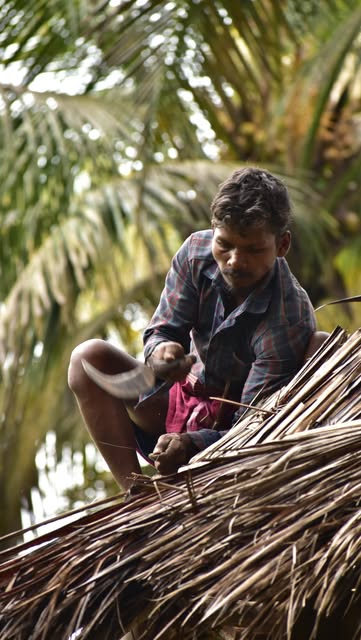
Natural building, in this movement, means making shelter with earth and with materials a place already knows how to hold. Wattle and daub. Cob. Mud plaster. Adobe. Leaf. Bamboo. The list is not a style. It is a set of constraints.
One line of this work is specific, and it is not ours to generalise. Mariyappan, an Irula elder, learned a building technique from the generations before him. For decades it stayed in his memory. Common Ground asked him to use it again. That is the claim the field note makes. It is not a claim that a centuries-old practice has been fully restored, or that a workshop equals a culture.
The Tribal Habitat and Architecture Workshop is one way people meet this work with their hands. Dates, fees and who it is for change. They are confirmed by writing to the team, not copied from an old post.
A building is climate-responsive when the wall, the roof and the wind are doing the work a machine is usually asked to do. That is the experiment. Comfort is part of the test. So is maintenance, which pretty photographs leave out.
In practice
- Earth, fibre, leaf and local timber
- Learning with knowledge holders, not extracting a technique
- Workshops that are editions, not a permanent timetable
- Buildings judged by use, rain, heat and repair
Related experiment and experiences sit one step away. If you want to try something, write. If you want to understand it first, keep reading.