What we explore
Ancestral knowledge
Learning with respect from knowledge systems that grew through long relationships with land and community.
This page uses a careful word on purpose. Ancestral. Indigenous. Local. A named community, when we know it. Not traditional as a soft default, and not ancient wisdom as a mood.
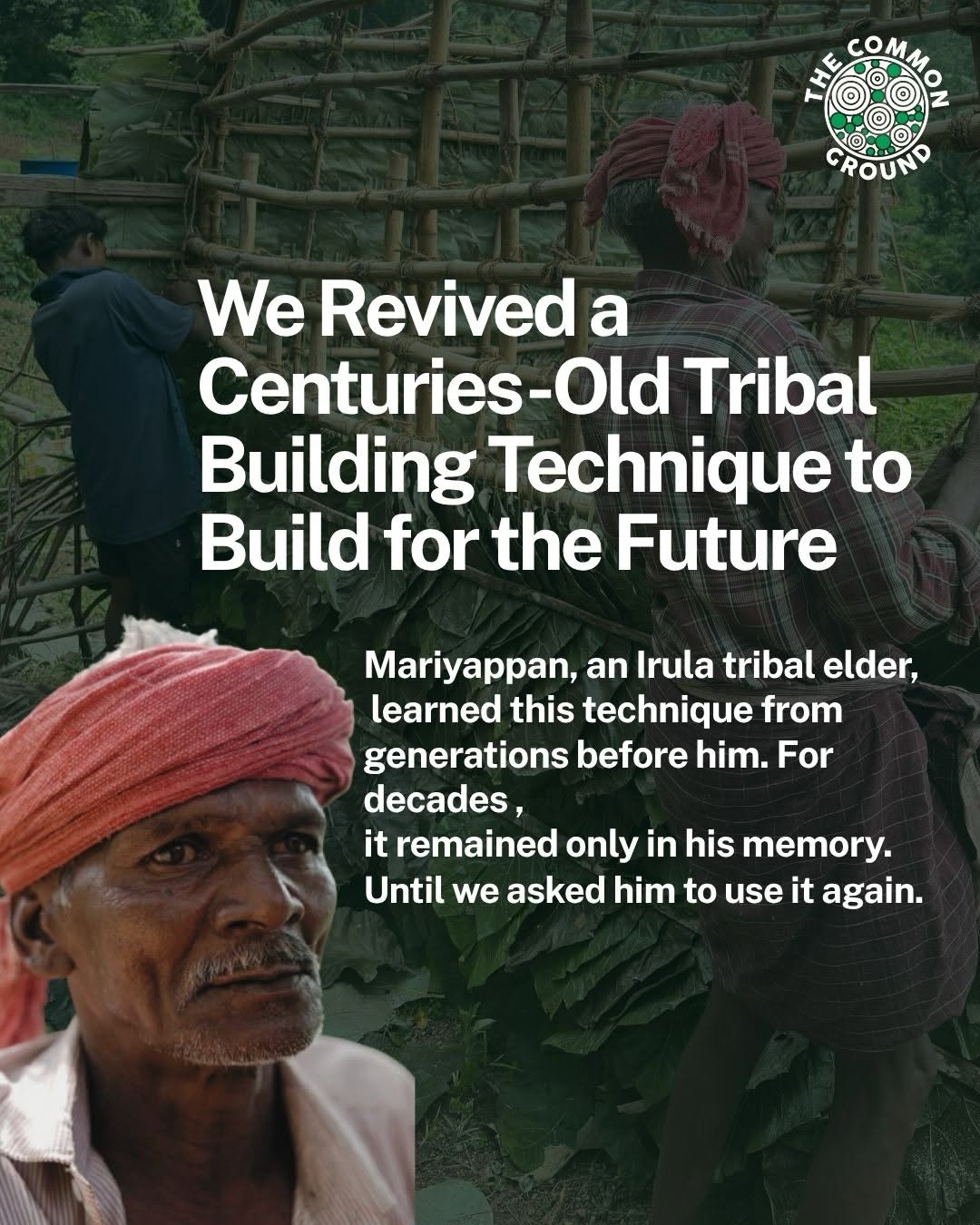
The clearest public example is also the one that should stay specific. Mariyappan, an Irula elder, learned a building technique from the generations before him. For decades it remained in his memory. Common Ground asked him to use it again, to build for the present. The credit for the technique stays with him and with the people who carried it. The organisation's role was to ask, to make room, and to document.
Learning with respect means a few practical things. Do not strip a practice out of the relationship that keeps it alive. Do not publish a how-to that turns someone's knowledge into a free method. Do not imply consent you do not have. Faces and names appear here only when they already appear in Common Ground's own public notes.
Indigenous and ancestral knowledge are not a resource pile for a climate brand. They are living systems. The movement's job, when it is invited, is to learn, to support the practice in the present, and to say clearly what it does not know.
In practice
- Named people and communities, not a generic elder
- Techniques credited to the lineage that holds them
- No how-to that extracts a practice from its people
- Consent treated as ongoing, not as a caption
Related experiment and experiences sit one step away. If you want to try something, write. If you want to understand it first, keep reading.